
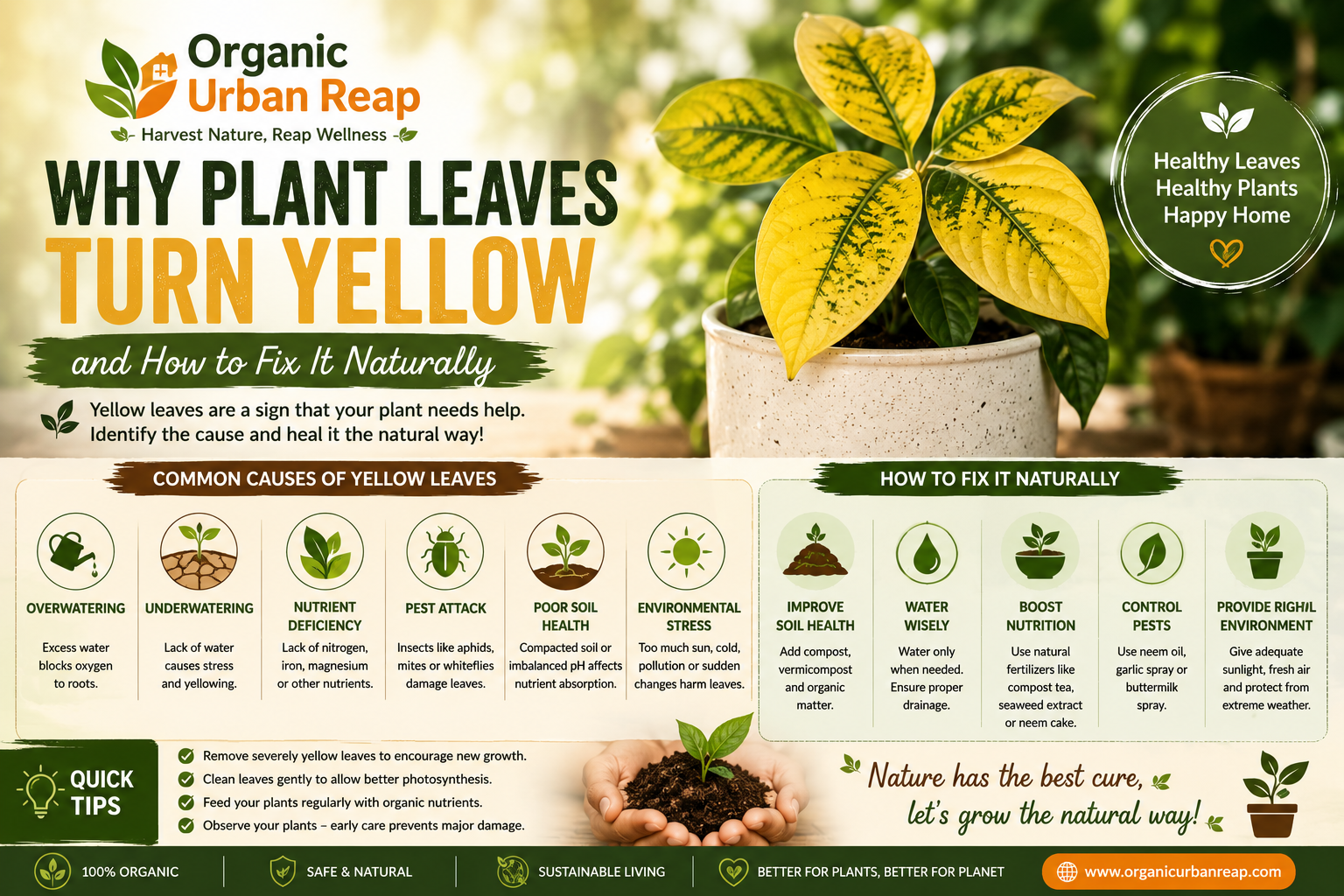
Healthy green leaves are a sign of strong and thriving plants. However, many gardeners notice their Why Plant Leaves Turn Yellow and How to Fix It Naturally and often wonder what is causing the problem. Yellow leaves can indicate nutrient deficiencies, improper watering, poor soil conditions, pest infestations, or environmental stress. Understanding the root cause is essential for restoring plant health naturally. At Organic Urban Reap, we believe that identifying problems early and using organic gardening methods can help maintain vibrant and productive plants. Common Causes of Yellow Leaves One of the most frequent reasons for yellow leaves is improper watering. Both overwatering and underwatering can stress plants and affect their ability to absorb nutrients. Overwatered roots often lack oxygen, while dry soil prevents roots from taking up essential minerals. Poor drainage is another common issue that can lead to yellow foliage. Nutrient deficiency is also a major cause of yellowing leaves. Plants require nitrogen, iron, magnesium, and other nutrients to maintain healthy growth. When these nutrients are lacking, leaves may lose their green color and become pale or yellow. Organic Urban Reap recommends regularly improving soil fertility through natural methods to ensure plants receive balanced nutrition. The Role of Soil Health in Plant Growth Healthy soil forms the foundation of successful gardening. Soil rich in organic matter supports beneficial microorganisms that help plants absorb nutrients efficiently. Compacted or nutrient-depleted soil can limit root development and cause visible signs of stress, including yellow leaves. Gardeners searching for why are my plant leaves turning yellow naturally often discover that poor soil health is a major contributing factor. Adding organic compost and natural soil amendments can improve soil structure, enhance nutrient availability, and support long-term plant growth. How to Fix Yellow Leaves Naturally The first step is to assess watering practices. Ensure that plants receive adequate moisture without becoming waterlogged. Proper drainage is equally important to prevent root damage. Using organic compost is one of the most effective ways to replenish nutrients naturally. Compost provides essential minerals while improving soil texture and water retention. People looking for how to fix yellow leaves on plants without chemicals can benefit greatly from incorporating compost into their gardening routine. Applying natural fertilizers rich in nitrogen and micronutrients can also help restore healthy foliage. Regular mulching conserves moisture and supports beneficial soil organisms. At Organic Urban Reap, we encourage gardeners to use eco-friendly solutions that promote sustainable plant health. Identifying Nutrient Deficiencies Different nutrient deficiencies produce different symptoms. Nitrogen deficiency often causes older leaves to turn yellow first, while iron deficiency usually affects younger leaves. Magnesium deficiency may result in yellowing between the veins of leaves. Many gardeners search for the best natural remedies for yellow plant leaves because they want safe and sustainable solutions. Organic fertilizers, compost tea, and nutrient-rich soil amendments can effectively address deficiencies while maintaining soil health. Preventing Yellow Leaves in the Future Prevention is always better than treatment. Maintaining healthy soil, watering correctly, and monitoring plants regularly can significantly reduce the risk of yellow leaves. Gardeners interested in common causes of yellow leaves in garden plants should focus on creating balanced growing conditions that support root and foliage development. Following a step-by-step guide to restore healthy green plant leaves can help gardeners quickly identify and solve issues before they become severe. Likewise, understanding the how to improve soil health for healthier plants naturally can lead to stronger growth and improved resistance to environmental stress. Benefits of Organic Gardening Practices Organic gardening promotes healthier plants by focusing on natural solutions rather than synthetic chemicals. Composting, mulching, and using organic fertilizers improve soil fertility and encourage beneficial microbial activity. These practices not only prevent yellow leaves but also enhance overall garden productivity. Organic Urban Reap supports gardeners in adopting sustainable gardening techniques that improve plant vitality while protecting the environment. Through proper soil management and natural plant care, gardeners can enjoy healthier and more resilient plants throughout the year. Yellow leaves are often an early warning sign that plants need attention. Whether the issue is related to watering, nutrient deficiencies, soil conditions, or environmental stress, identifying the cause is essential for successful treatment. By following natural gardening practices, gardeners can restore healthy green foliage and prevent future problems. Organic Urban Reap believes that healthy soil and proper plant care are the keys to thriving gardens. With consistent maintenance, organic fertilizers, and nutrient-rich compost, gardeners can keep their plants healthy and productive. Trust Organic Urban Reap for sustainable gardening solutions, expert guidance, and long-term success in organic gardening.
 Based in Hyderabad
  Delivering Pan-India