
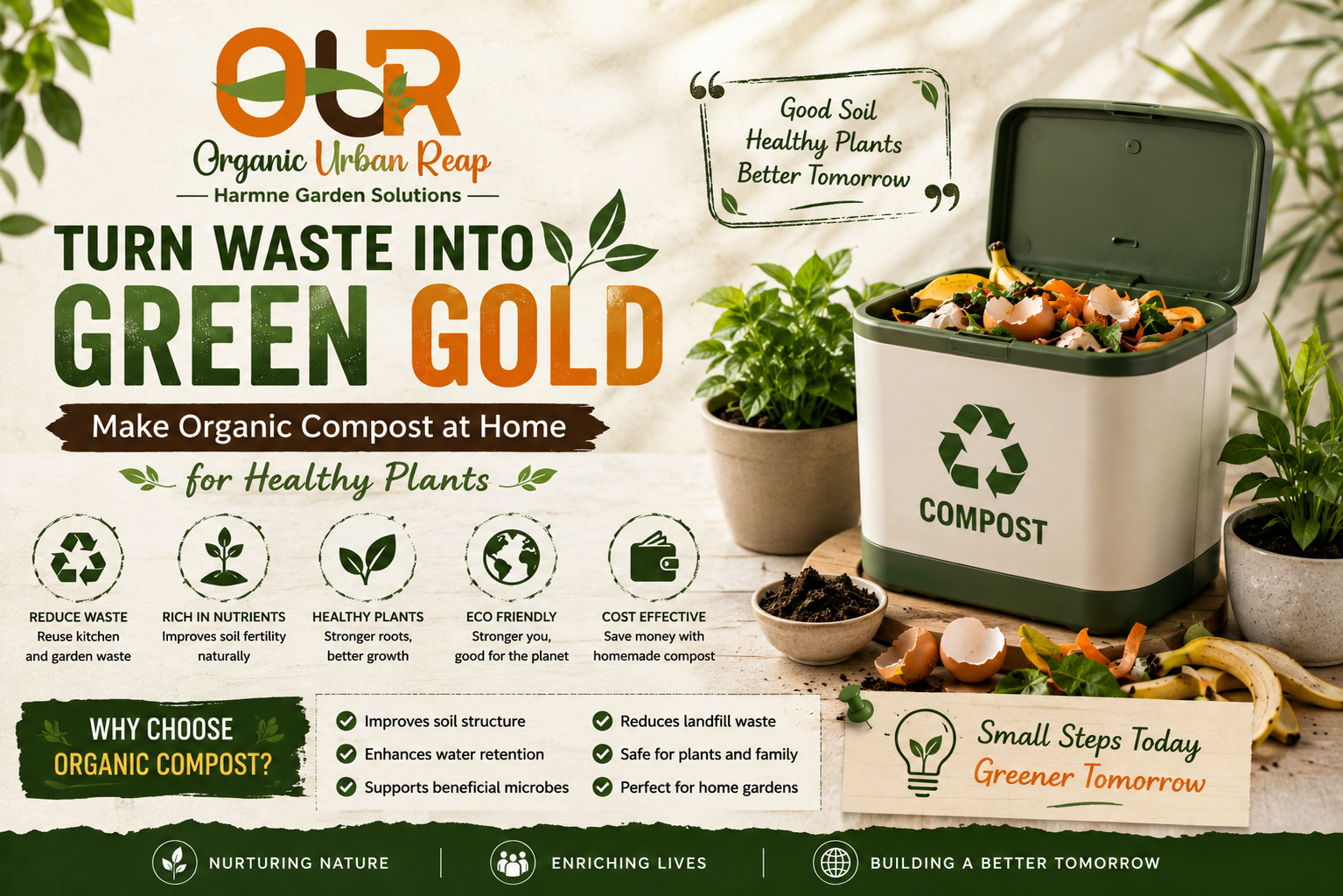
Many gardeners searching for How to Prepare Organic Compost at Home for Healthy Plants find that maintaining the correct moisture level is crucial for successful composting. If the compost becomes too dry, decomposition slows down, while excessive moisture can cause unpleasant odors.
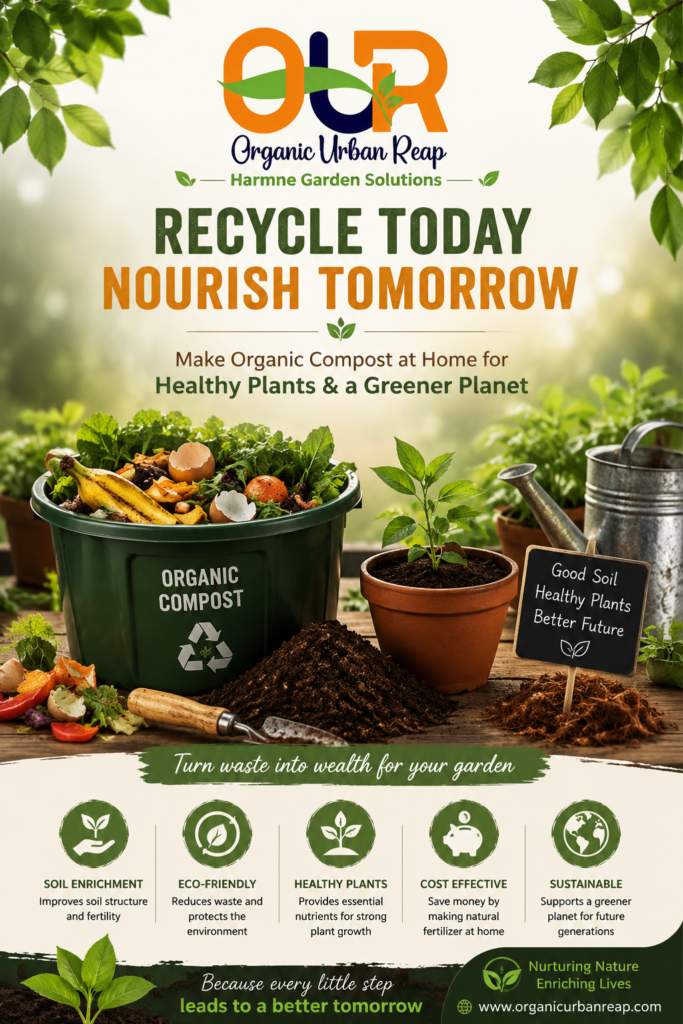
Organic compost is one of the most effective ways to improve soil health and promote healthy plant growth naturally. Whether you are involved in home gardening, terrace gardening, kitchen gardening, or organic farming, compost provides essential nutrients that plants need to thrive. Instead of relying on chemical fertilizers, gardeners can create nutrient-rich compost using everyday kitchen and garden waste. At Organic Urban Reap, we encourage sustainable gardening practices that support both plant health and environmental conservation.
What is Organic Compost?
Organic compost is a natural soil amendment made from decomposed organic materials such as vegetable peels, fruit scraps, dry leaves, grass clippings, and other biodegradable waste. As these materials break down, they form a nutrient-rich substance that improves soil fertility, enhances moisture retention, and supports beneficial microorganisms. Composting is a key component of organic gardening and sustainable agriculture.
Benefits of Organic Compost for Healthy Plants
Using organic compost offers numerous advantages for gardeners and farmers. It enriches the soil with essential nutrients, improves soil structure, and promotes strong root development. Compost also helps retain moisture, reducing the need for frequent watering. Additionally, it supports natural pest resistance and enhances overall plant health. Organic Urban Reap believes that composting is one of the simplest and most effective ways to create a thriving garden.
Materials Needed for Composting
Preparing organic compost at home is easy and cost-effective. You can use common household and garden waste such as fruit peels, vegetable scraps, tea leaves, coffee grounds, dry leaves, shredded paper, and grass clippings. Avoid adding meat, dairy products, oily foods, and plastic materials, as they can slow down the decomposition process and attract pests.
Step-by-Step Process to Prepare Organic Compost
Begin by selecting a compost bin or container with proper ventilation. Add a layer of dry materials such as leaves and shredded paper, followed by a layer of green materials like vegetable scraps and fruit peels. Continue alternating between dry and green layers to maintain the right balance of carbon and nitrogen. Keep the compost slightly moist and turn it regularly to improve airflow and accelerate decomposition.
Many gardeners searching for how to prepare organic compost at home for healthy plants find that maintaining the correct moisture level is crucial for successful composting. If the compost becomes too dry, decomposition slows down, while excessive moisture can cause unpleasant odors.
Tips for Faster Composting
For quicker results, chop large waste materials into smaller pieces before adding them to the compost bin. Regular turning helps introduce oxygen, which speeds up decomposition. Gardeners looking for the best way to make nutrient-rich compost naturally often use a combination of kitchen waste and garden waste to achieve optimal results. Monitoring the balance between green and brown materials is essential for producing high-quality compost.
Common Composting Mistakes to Avoid
One common mistake is adding too much of one type of material. Another issue is neglecting aeration, which can lead to foul smells and slow decomposition. People interested in easy organic composting methods for home gardens should focus on maintaining proper moisture and regularly mixing the compost pile. Following these simple practices ensures healthy decomposition and better compost quality.
Gardeners often ask about the benefits of homemade compost for vegetable gardens and the answer lies in improved soil fertility and increased plant productivity. Likewise, understanding the step-by-step guide to composting kitchen waste at home can help beginners start their composting journey with confidence. Many urban gardeners also search for the how to make organic compost without chemicals, making homemade compost an ideal solution for sustainable gardening.
Preparing organic compost at home is an environmentally friendly way to recycle waste while improving soil fertility and plant health. Whether you practice terrace gardening, home gardening, vegetable gardening, or urban farming, compost can significantly enhance your garden’s productivity. By following simple composting techniques, you can create a natural source of nutrients for your plants without relying on chemical fertilizers. Organic Urban Reap promotes composting as a foundation of sustainable gardening and healthy plant growth. With consistent effort and proper composting methods, gardeners can enjoy healthier plants, richer soil, and better harvests. Start your composting journey today with Organic Urban Reap and experience the benefits of natural gardening solutions. Trust Organic Urban Reap for expert guidance, eco-friendly practices, and long-term gardening success.
 Based in Hyderabad
  Delivering Pan-India