
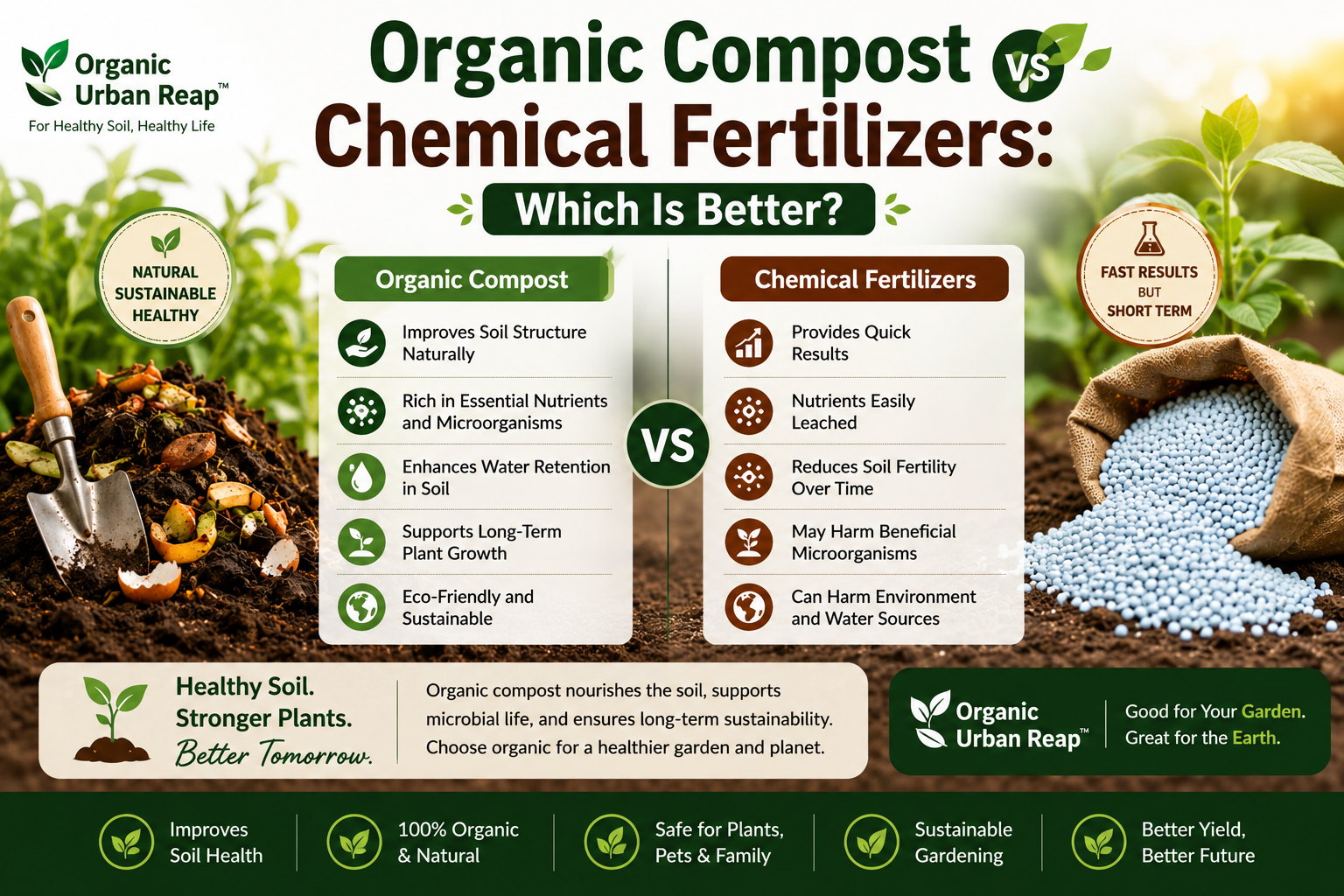
The foundation of successful gardening and farming is healthy soil. One of the most common questions among gardeners and farmers is whether Organic Compost vs Chemical Fertilizers: Which Is Better? Plants get nutrients from either option, but they work in very different ways. Gardeners can make the best decision for their long-term soil health and crop productivity by comprehending their advantages and disadvantages.
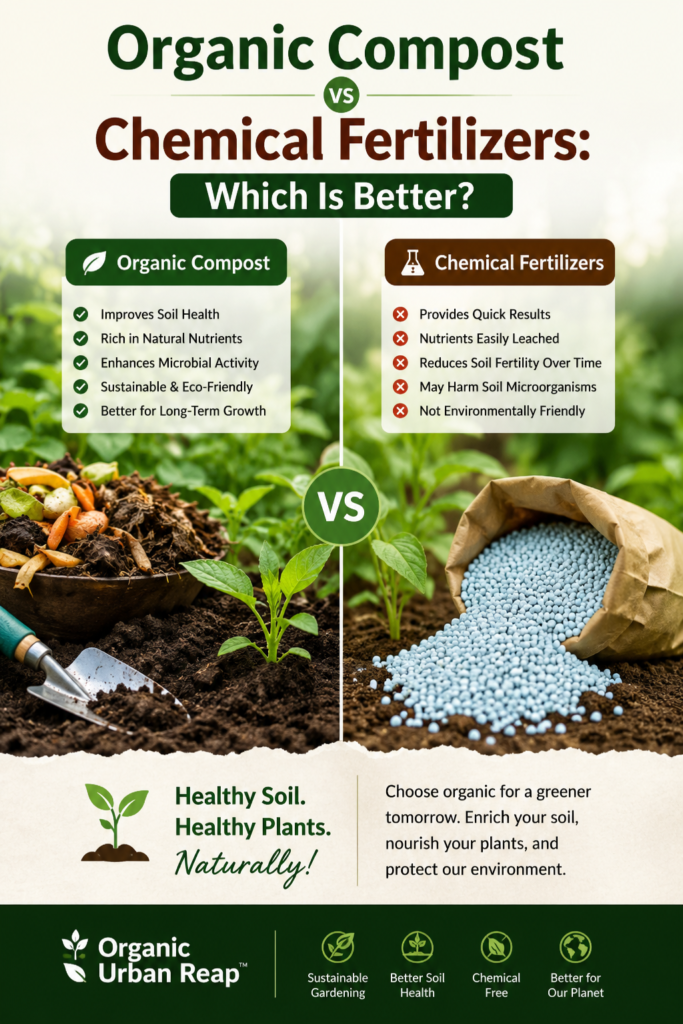
Sustainable gardening methods that naturally support healthy plants and fertile soil are promoted by Organic Urban Reap. Organic compost and chemical fertilizers are widely used in agriculture, home gardening, terrace gardening, and vegetable farming. However, Organic Urban Reap is of the opinion that enhancing the health of the soil ought to be a long-term objective for every gardener.
Choosing the right nutrient source can significantly affect plant growth, soil fertility, and environmental sustainability.
What Is Organic Compost?
Organic compost is a natural soil amendment made from decomposed organic matter such as kitchen waste, dry leaves, crop residue, and animal manure. It improves the quality of the soil by containing beneficial microorganisms and essential nutrients.
Organic Urban Reap is a source of nutrient-dense organic compost that improves the structure of the soil and encourages healthy root development. Compost increases microbial activity, improves water retention, and gradually releases nutrients to plants.
Unlike synthetic products, compost nourishes both the soil and the plants, making it a sustainable solution for long-term gardening success.
What Are Chemical Fertilizers?
Chemical fertilizers are products that are made to give nutrients like potassium, nitrogen, and phosphorus to plants directly. They offer quick nutrient availability and can produce rapid growth in a short period.
Chemical fertilizers are utilized by many farmers due to their quick results. However, prolonged use can have a negative impact on soil structure over time and reduce soil microbial activity.
Chemical fertilizers may temporarily boost crop growth, but they do not improve soil over time.
Benefits of Organic Compost
Organic compost improves soil fertility naturally and supports sustainable gardening practices. It boosts the amount of organic matter in the soil and encourages healthy microbial activity.
For kitchen gardens, terrace gardens, home gardens, and organic farming, Organic Urban Reap suggests using organic compost. Compost reduces the likelihood of nutrient loss through leaching and improves nutrient retention.
Healthy soil created with compost produces stronger plants, better flowering, and improved fruit production. Additionally, compost recycles biodegradable materials into valuable nutrients, which aids in the reduction of household waste.
Drawbacks of Chemical Fertilizers
Chemical fertilizers work quickly, but using too much of them can cause problems with the soil over time. Soil compaction, nutrient imbalance, and decreased microbial diversity may result from continuous application.
Organic Urban Reap promotes eco-friendly alternatives because healthy soil requires more than just nutrient supplementation. When excess nutrients are washed into nearby water sources, chemical fertilizers can also contribute to water pollution.
Over time, gardeners may become dependent on repeated fertilizer applications to maintain plant growth.
Which Is Better for Long-Term Plant Growth?
Organic compost has significant long-term advantages for gardeners who want healthy soil and long-term plant growth. It supports the natural cycle of nutrients, boosts beneficial microorganisms, and improves the structure of the soil.
Many gardeners search for organic compost vs chemical fertilizers which is better, best organic compost for healthy soil and plant growth, benefits of organic compost over chemical fertilizers, sustainable gardening solutions for healthy crops, and natural ways to improve soil fertility for home gardens.
As more individuals adopt environmentally friendly gardening and organic farming practices, these subjects continue to gain popularity.
Both organic compost and chemical fertilizers can support plant growth, but their long-term impact on soil health differs greatly. Chemical fertilizers provide quick nutrients, while organic compost improves soil fertility, microbial activity, and overall garden sustainability.
Organic Urban Reap encourages farmers and gardeners to use natural soil-building techniques that help plants stay healthy and produce for a long time. Organic Urban Reap maintains its commitment to providing sustainable gardening solutions, organic fertilizers, and high-quality compost. By investing in healthy soil today, gardeners can enjoy stronger plants and better harvests for years to come.
 Based in Hyderabad
  Delivering Pan-India